LEARNING HUB
ICH Q14 Guidelines: Fundamentals of Analytical Procedure Development
Welcome
ICH Q14 represents one of the most significant advances in analytical science regulation in recent years, and understanding it is now essential for everyone working in analytical development and QC for biopharmaceuticals.
This learning hub brings together expert-led content to help you build a confident, practical understanding of ICH Q14: what it requires, how it works in practice, and why the enhanced, science-based approach it introduces is a genuine step forward for the field.
Whether you’re new to ICH Q14 or looking to deepen your implementation knowledge, you’ll find a structured mix of an on-demand presentation, an expert panel discussion, a written article, and curated external resources, all in one place.
Ask a Question
Join the conversation (or start a discussion) on the BioQC User Community.
Contact Us
If you have any questions about the learning hub, don’t hesitate to get in touch with the BioQC Team: Feedback & General Enquiry
Disclaimer: The opinions shared by the presenters, panellists, and authors as part of this learning hub represent their individual interpretations of the ICH guidelines and do not embody the official positions of their respective organisations or the ICH itself.
Presenter

Dr. Christof Finkler
Senior Director, CMC Policy – Technical Development Biotech
F. Hoffmann-La Roche AG (Switzerland)
Dr. Christof Finkler is the Senior Director of CMC Policy within Technical Development Biotech at Roche and also acts as a senior technical advisor within Roche’s biotech development. In his previous role as Site Head of Analytical Development and Quality Control Biochemistry at Roche’s headquarters in Basel, Switzerland, he was responsible for establishing new analytical technologies, protein characterisation, and the development and validation of analytical methods, as well as the quality control of investigational medicinal products and the transfer of analytics to the commercial QC units. In addition to his extensive knowledge in the field of analytics, Christof is an expert in QbD for product and process development and has led Roche’s QbD initiative. Christof serves as the EFPIA topic lead for analytical lifecycle management and is a member of the ICH Q2/Q14 expert working group/implementation working group and the EFPIA ICH Q1/Q5C support team. He is also a member of the CASSS Board of Directors, serves as a board member of the IQ Consortium, and is part of the board of the Analytical Science division of the Swiss Chemical Society.
Panellists

Prof. Sandra Furlanetto
Professor of Analytical Chemistry
University of Florence (Italy)
Prof. Sandra Furlanetto holds a PhD in Pharmaceutical Chemistry and is a Full Professor of Analytical Chemistry at the University of Florence. She serves as the Editor of the Journal of Pharmaceutical and Biomedical Analysis and is a member of the Italian National University Council. From 2011 to 2021, she acted as the Rector’s Delegate for student guidance at the University of Florence. She has made significant contributions to the dissemination, both nationally and internationally, of the role played by multivariate strategies in analytical chemistry and pharmaceutical technology. She is an expert in applying QbD and AQbD to ensure the quality of analytical processes and pharmaceutical products.

Dr. Cyrille Chéry
Associate Director
UCB (Belgium)
Dr. Cyrille Chéry is the Associate Director at UCB, a Belgian pharmaceutical company. He leads the team responsible for developing and validating analytical methods for controlling drug substances and drug products (NCEs and antibodies). These methods utilise physicochemical principles, such as mass spectrometry. He holds a PhD (2004) in analytical chemistry from the University of Ghent, Belgium, and a Master of Science (1997) from the University of Bordeaux. Before joining UCB in 2012, he held various positions in analytical chemistry at MSD/Merck, focusing on small molecules (new chemical entities). He is the author of papers on inductively coupled plasma-mass spectrometry and on analytical quality by design.

Dr. Lars Geurink
Associate Director Assay Development
Batavia Biosciences (Netherlands)
Dr. Lars Geurink is the Associate Director of Assay Development at Batavia Biosciences. Intrigued by biotechnology, immunology, and neuroscience, and passionate about developing biotech products, Lars studied life sciences and technology at Universiteit Leiden and Technische Universiteit Delft. He earned his PhD from Uppsala Universitet, focusing on analytical quality by design (AQbD) for vaccine characterisation. Prior to joining Batavia Biosciences, Lars worked at Janssen Vaccines, where he served as team manager for analytical development and gained experience in analytical strategies for vaccine testing, implemented AQbD and provided analytical solutions for a new RNA vaccine platform. As Technical Lead at Batavia Biosciences, Lars deepened his expertise in biotech products, processes, and the biopharmaceutical lifecycle.
Moderator

Prof. Dr. Cari Sänger-van de Griend
Scientific Director
BioQC
Expert in (bio)pharmaceutical analytical chemistry with 30 years of industrial and academic experience in method development and control strategies, including Analytical Quality by Design (AQbD), and focused on best practices and knowledge sharing.
Moderator / Author

Dr. Ewoud van Tricht
Scientific Director
BioQC
Expert in (bio)pharmaceutical analysis with over 18 years of industrial experience in analytical development, Quality Control, and Analytical Quality by Design (AQbD). He has contributed to diverse therapeutic modalities, including small molecules, viruses, and cells, at leading companies such as Janssen Vaccines and Sanofi Cell Therapy.
ICH Q14: Guideline Overview for Analytical Procedure Lifecycle Management
The ICH Q14 guideline, formally part of the International Council for Harmonisation of Technical Requirements for Pharmaceuticals for Human Use (ICH), represents a step forward in ensuring that analytical methods for pharmaceuticals are scientifically robust, reliable, and adaptable over time. Rooted in ICH Q9 (quality risk management) principles and ICH Q10 (pharmaceutical quality systems), ICH Q14 introduces an enhanced approach that prioritises science-based understanding and continuous improvement. Below is a comprehensive yet accessible overview of its key elements.

What is Analytical Procedure Lifecycle Management?
Analytical procedure lifecycle management refers to the continuum of activities involved in designing, validating, transferring, executing, monitoring, and, when necessary, modifying analytical procedures. Traditionally, these stages were treated as distinct and static, often leading to inefficiencies, redundancies, and risks of failure when unexpected variability arose. The ICH Q14 guideline integrates these stages into a cohesive lifecycle framework, ensuring robust methods capable of consistently delivering accurate, precise results.
This paradigm shift aligns with the broader lifecycle management concepts introduced in other ICH guidelines, such as ICH Q8 (Pharmaceutical Development) and ICH Q12 (Product Lifecycle Management). It emphasises that methods must meet initial validation criteria and remain fit for purpose as circumstances evolve.
Two Approaches in Analytical Procedure Lifecycle Management
The guideline introduces two primary approaches to analytical procedure development: the Minimal Approach and the Enhanced Approach. These approaches provide flexibility, allowing companies to choose a strategy based on the complexity of the analytical procedure, regulatory requirements, and the product’s risk profile.
Minimal Approach
The Minimal Approach focuses on basic validation and method implementation. It generally involves meeting predefined, often generic, acceptance criteria for method performance, typically derived from pharmacopeial requirements. This approach is more straightforward and is suitable for simpler analytical methods that do not involve complex risk factors or substantial variability.
Key Features of the Minimal Approach:
- Use of standard, well-established methods and tools.
- Less emphasis on understanding the underlying variability and interactions in the procedure.
- Focus on compliance with regulatory requirements and acceptance criteria.
- Suitable for routine, high-volume tests where variability is minimal or already well understood.
While this approach is efficient for straightforward methods, it often lacks the flexibility and robustness needed for more complex analytical processes.
Enhanced Approach
The Enhanced Approach, by contrast, provides a much more thorough understanding of an analytical procedure’s performance through Risk Assessment and Design of Experiments (DoE). This approach is driven by a more in-depth scientific knowledge of the process. It uses tools to identify and control critical parameters that influence the outcome of the analytical procedure. The enhanced approach is particularly valuable when there is significant variability in the process or when analytical methods are complex, such as those involved in biologics or advanced drug delivery systems.
As shown in Figure 1, the Enhanced Approach for analytical procedure development systematically evaluates key variables to optimise method performance throughout its lifecycle.
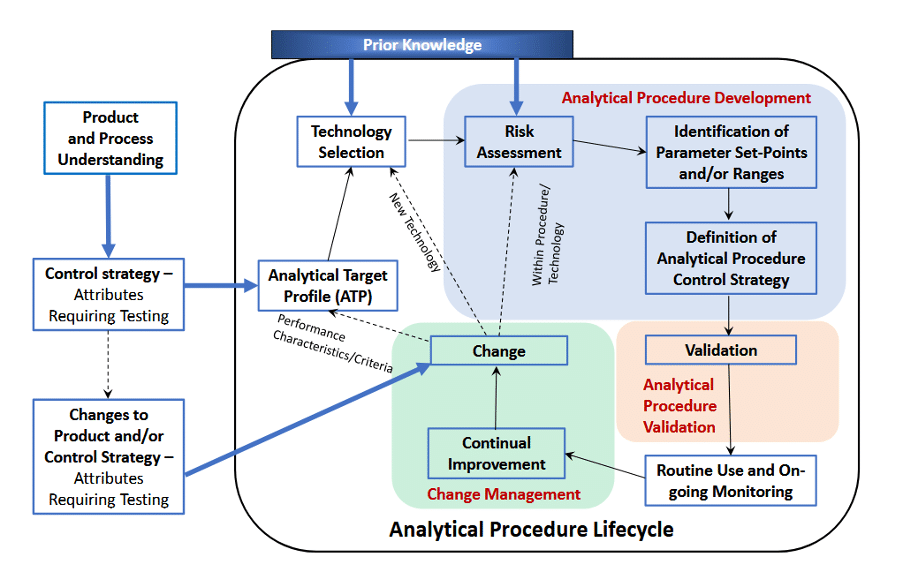 Figure 1: The Analytical Procedure Lifecycle from ICH Q14
Key Features of the ICH Q14 Enhanced Approach
(1) Analytical Target Profile (ATP)
The Analytical Target Profile (ATP) is the cornerstone of the enhanced approach. Analogous to the Quality Target Product Profile (QTPP) in product development, the ATP defines the desired performance criteria for an analytical procedure. This includes attributes such as accuracy, precision, sensitivity, and specificity based on the quality attributes of the drug product.
Purpose of ATP:
- Guides the selection and development of analytical methods.
- Serves as a benchmark for validation, verification, and future improvements.
- Supports risk-based decision-making during the lifecycle.
(2) Risk-Based Development
ICH Q14 emphasises using risk assessment tools to identify and prioritise critical method parameters. The approach reduces uncertainty and improves reliability by focusing efforts on parameters that significantly impact the reportable result.
(3) Method Operable Design Region (MODR)
The MODR is the analytical equivalent of a design space, outlining the operational parameters within which the procedure reliably performs. Establishing the MODR involves systematic experimentation to understand the effects of variables (e.g., temperature, pH, and flow rates) on method performance. Although using a MODR is not obligatory, it can have certain advantages.
Benefits of MODR:
- Flexibility in making changes within the MODR without regulatory resubmissions.
- Enhanced method robustness and fewer out-of-specification results.
(4) Continual Improvement
Unlike traditional methods, which often remain static post-validation, the enhanced approach views methods as dynamic. Regular monitoring and data analysis enables ongoing refinement, ensuring methods adapt to new challenges, such as tighter regulatory specifications or changes in manufacturing processes.
Why Choose the Enhanced Approach Over the Minimal Approach?
- Greater Robustness: The enhanced approach minimises the likelihood of failures and out-of-specification results by thoroughly understanding and controlling variability.
- Regulatory Efficiency: By defining MODRs and linking them to the ATP, many post-approval changes can be managed internally, reducing regulatory submissions.
- Lifecycle Adaptability: Methods remain fit-for-purpose even as regulatory requirements or manufacturing conditions change.
| Aspect | Minimal Approach | Enhanced Approach |
|---|---|---|
| Focus | Meeting predefined validation criteria | Lifecycle performance and adaptability |
| Development | Iterative and univariate | Systematic, multivariate, and risk-based |
| Validation | One-time activity | Part of continuous monitoring |
| Flexibility | Limited; changes often require re-validation | Changes within MODR are streamlined |
| Robustness | Reactive to variability | Proactively designed to minimize variability |
Challenges and Opportunities
Challenges:
- Initial Effort: Implementing the enhanced approach requires significant upfront investment in resources, expertise, and experimental design.
- Knowledge Gaps: Many organisations lack sufficient understanding of advanced risk-based and multivariate techniques.
- Regulatory Variability: Global alignment on lifecycle management practices is still evolving, complicating implementation for multi-national companies.
Opportunities:
- Technology Integration: Innovations such as Process Analytical Technology (PAT) and machine learning can further enhance method understanding.
- Harmonization: ICH Q14 promotes consistency in global regulatory expectations, paving the way for streamlined processes.
- Broader Applications: While primarily aimed at pharmaceuticals, these principles are adaptable to biologics, biosimilars, and even non-pharmaceutical industries.
Future Directions
The adoption of ICH Q14, alongside updates to ICH Q2(R2), signals a growing regulatory focus on analytical innovation and lifecycle management. Future developments may include:
- Broader adoption of the ATP and MODR concepts.
- Enhanced integration of digital tools for real-time monitoring and predictive analytics.
- Greater alignment between global regulators to facilitate streamlined implementation.
Conclusion
The ICH Q14 guideline represents a transformative approach to analytical procedure lifecycle management. By focusing on science-based understanding, risk management, and continual improvement, it ensures that analytical methods not only meet current needs but are prepared for future challenges. For industries and regulators alike, adopting these principles will enhance efficiency, consistency, and ultimately, patient safety.
BioQC Learning Hubs
- Implementing ICH Q14 Guidelines for Analytical Excellence – coming!
- ICH Q2(R2) & Q14 for Biologics: Practical Expert Insights – coming!
BioQC User Community
External Links ↗
ICH & USP Guidelines
- ICH Q14 Analytical Procedure Development
- ICH Q2(R2) Validation of Analytical Procedures
- Training material ICH Q2 and Q14
- USP – Analytical Procedure Lifecycle (USP <1220>)
Course
Brought to you by: